
Insight on Your Profit & Loss Report
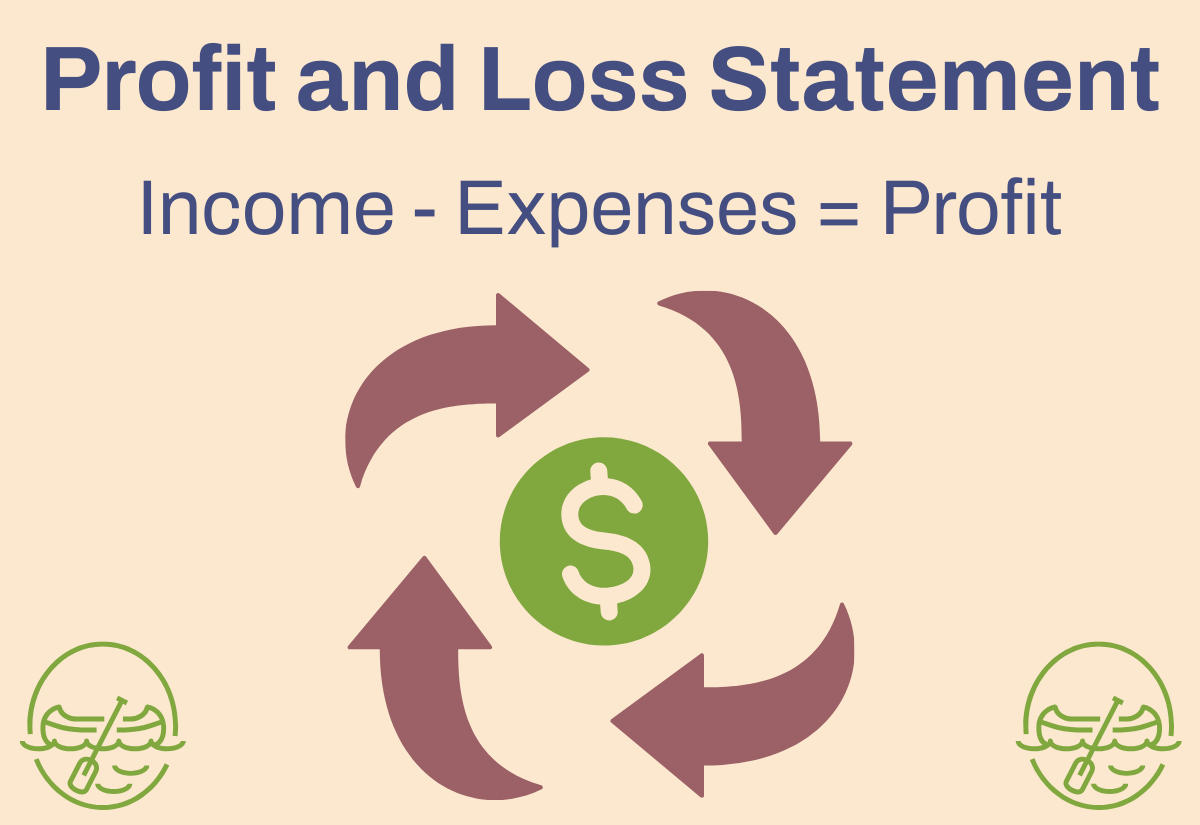
Your Profit & Loss is also known as the Income Statement or, for non-profits, the Statement of Activity. It shows total revenues and expenses for a given period of time and helps us see whether our day-to-day operations are profitable. Let’s walk through some questions and examples that you can apply to your own P&L.
How do I know whether an expense is “variable” or “fixed” cost?
Does the expense change according to the change in your sales volume? If so, it’s likely part of your variable cost. Think supplies, production labor, or shipping.
If it’s instead a consistent expense each month, like rent, office software, or a salary, that’s a fixed cost.
How do I know how much I need to sell to “break even,” where I have covered my fixed costs but profit = $0? Let’s do some simple math together!
Once you have split out your variable costs from your fixed costs, you can figure out your “margin” - which means how many dollars of revenue are left over after covering the variable costs.
Revenue per item - Variable Expenses per item = Gross Margin per item
Gross margin helps us understand how much we must sell to “break even:”
Fixed Costs / Gross Margin per item = number of items to sell
So, if I sell an item for $100 and have $30 of Variable Expenses, how many units must I sell to cover $5040 of Fixed Costs?
$100/item Revenue - $30/item Variable Expense = $70/item Gross Margin
$5040 Fixed Costs / $70 Gross Margin per item = 72 items we must sell!
How do I increase my profitability?
On a per-item basis, you increase your margins by increasing your revenue per item or decreasing your variable expenses per item. It’s always a good idea to look for ways to increase revenue and decrease expenses where you can - just be careful not to cut costs to the detriment of product quality, employee morale, and customer service.
As a whole, though, you can also increase your overall profitability by increasing your volume of sales - as long as (for a consistent set of fixed costs) your variable expenses stay low enough that the overall gross margin continues to increase.
Once I’ve covered my fixed costs, how much can I expect profit to increase as I make additional sales?
As long as your fixed costs stay the same, you can expect your profit to increase by the Gross Margin for each additional item you sell.
As you can see, knowing how your P&L works and calculating your Gross Margin can be a very helpful metric. It’s a key element if you are trying to build up savings for the business or pay off debt because you can understand the direct correlation between increased effort and overall profitability.
Knowing your gross margin also empowers you to see whether your business is running as efficiently as you think it is, as well as where you can fine-tune your processes to increase revenue or decrease variable costs. A higher gross margin means you are getting more “bang” for each dollar of sales, which is a good thing all around!
We hope this encourages you to look at the reports with fresh eyes! Lakesite clients have the unique opportunity to meet with Heather, our founder and CEO, to review these important financial statements for their business. Schedule an Initial Consultation to learn more about our services.